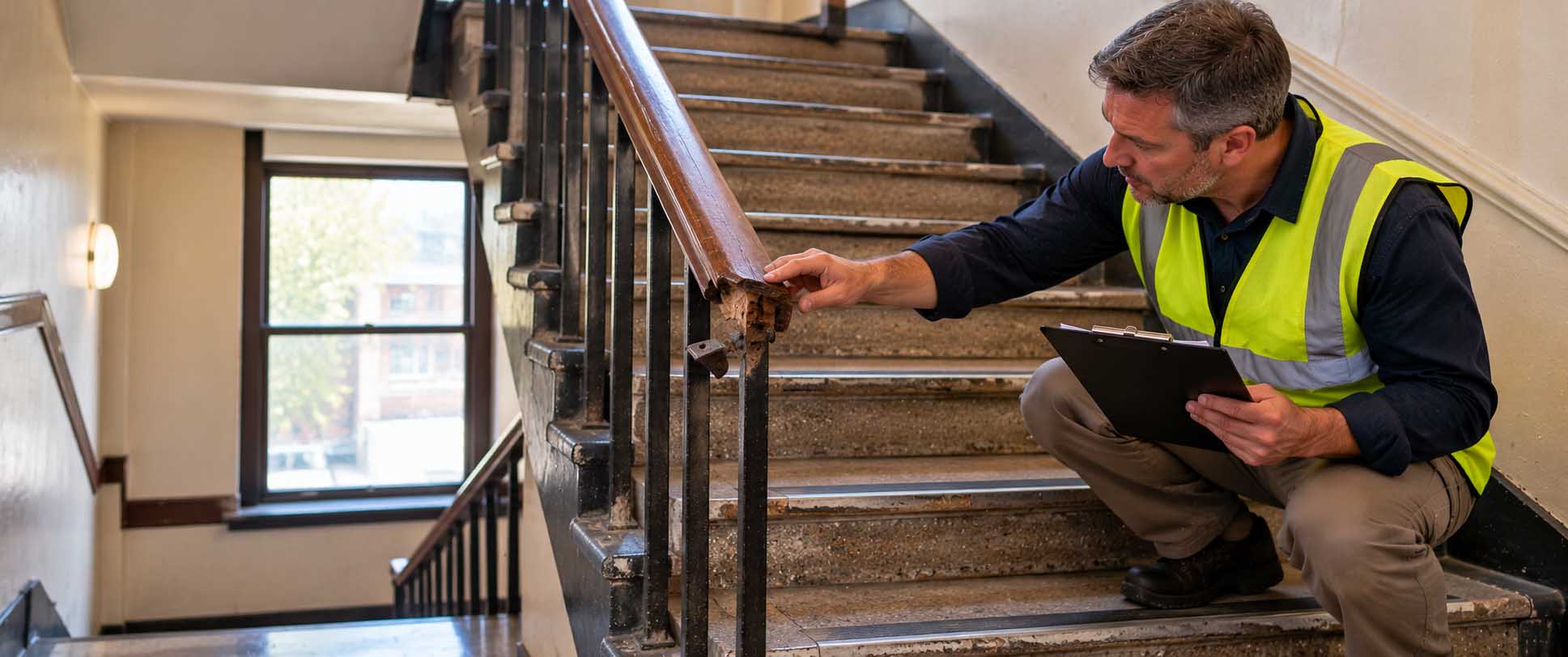
Unsafe stairway injuries can occur when damaged steps, inadequate lighting, loose handrails, or other hazardous conditions make a staircase difficult to use safely.
However, a staircase accident does not automatically mean the property owner was negligent. Legal responsibility generally depends on the condition of the stairs, the duties of the responsible parties, their knowledge of the hazard, and whether the condition caused the injury.
Understanding these factors can help injured individuals recognize the safety issues and evidence that may matter in a premises liability claim.
Evidence plays an important role in evaluating unsafe stairway injuries. Photographs, maintenance records, witness statements, and medical documentation can help establish the staircase’s condition and the circumstances of the accident.
Common Causes of Injuries Caused by Unsafe Stairways
Unsafe stairway injuries can raise important questions about building maintenance, structural defects, inspection practices, and property safety responsibilities.
Stairways require consistent construction, maintenance, and appropriate safety precautions. Several conditions may increase the risk of an accident.
Broken or Uneven Stair Steps
Cracked, loose, or uneven stair treads can interfere with normal footing.
For example, a damaged step edge may cause someone to lose balance while descending a staircase. However, determining whether the condition was legally dangerous requires examining its nature and surrounding circumstances.
Loose or Missing Handrails
Handrails provide support when people move between different floor levels. A loose, unstable, or missing handrail may increase the risk of a fall or worsen its consequences.
However, whether a particular handrail condition violates a legal duty depends on applicable building requirements and the facts of the incident.
Poor Stairway Lighting
Inadequate lighting can make it difficult to identify step edges, obstacles, and changes in elevation.
For example, a dimly lit apartment staircase may prevent visitors from recognizing a damaged tread. Nevertheless, investigators must evaluate lighting conditions alongside other relevant factors.
Slippery Stair Surfaces
Water, cleaning solutions, and other substances may reduce traction on stair treads. In addition, worn flooring materials can affect how safely people use the stairs.
The cause, duration, and visibility of the condition may become important in a subsequent injury claim.
Property Owner Liability for Injuries Caused by Unsafe Stairways
Property owners and occupiers may have responsibilities to maintain reasonably safe conditions under applicable law. However, these responsibilities do not create automatic liability whenever someone falls.
In a typical New York premises liability case, the injured person may need to establish that the responsible party created the dangerous condition or had actual or constructive notice of it.
The claimant must also establish a legally sufficient connection between the condition and the injury.
For example, a building owner who receives repeated complaints about a loose handrail may have information relevant to notice. Still, the outcome depends on the available evidence and applicable legal standards.
Injuries Caused by Unsafe Stairways Under New York Law
New York stairway injury claims may involve negligence principles, property maintenance responsibilities, and applicable building regulations.
For example, a staircase in a commercial building may raise questions about handrail requirements, stair dimensions, lighting, and maintenance.
However, building-code applicability can depend on factors such as the property’s construction, alterations, and governing regulations.
Individuals researching Siben & Siben personal injury practice can review information about the firm’s legal services for personal injury matters in Bay Shore, New York.
For people injured in Nassau County or Suffolk County, understanding the relevant property conditions and applicable legal standards may help clarify potential claims.
The existence of a building defect does not automatically prove that it caused a particular injury.
Evidence for Injuries Caused by Unsafe Stairways
Evidence can help establish the physical condition of the stairs and the circumstances of the incident.
Relevant materials may include:
- Photographs of damaged steps
- Images of handrails and stair edges
- Measurements of relevant stair dimensions
- Surveillance recordings
- Witness statements
- Maintenance and inspection records
- Previous complaints about the staircase
- Medical records documenting the injury
For example, photographs may help show whether a stair tread was visibly damaged shortly after the accident.
However, photographs alone may not establish how long the condition existed. Therefore, other documentation may be necessary to evaluate notice and responsibility.
What to Do After an Unsafe Stairway Injury
After a staircase accident, immediate medical needs should take priority. If it is safe and practical, several additional steps may help preserve relevant information.
Report the Stairway Accident
Notify the building manager, property owner, or appropriate representative.
Provide an accurate description of what happened without speculating about unknown facts. When possible, ask whether the property maintains an incident reporting process.
Document Unsafe Stairway Conditions
Photograph the location, including the affected step, nearby handrails, lighting, and surrounding conditions.
If possible, record the approximate location of the incident within the building. These details may help identify the specific condition involved.
Preserve Important Records
Keep medical documents, accident-related correspondence, and contact details for relevant witnesses.
In addition, avoid altering potentially important physical evidence. Relevant records may help explain both the accident and its consequences.
Can Building Code Violations Affect Stairway Claims?
Yes. Applicable building regulations may become relevant when evaluating whether a staircase met required safety standards.
For example, certain regulations address handrails, stair dimensions, and other structural features.
However, identifying a possible code violation requires determining which rules apply to the specific property.
A violation also does not necessarily establish every element of a personal injury claim. The relationship between the condition and the accident remains important.
Therefore, some cases may require technical evaluations to determine whether the staircase complied with applicable requirements.
Comparative Negligence in Unsafe Stairway Accidents
New York generally follows comparative negligence principles. As a result, an injured person’s own conduct may affect the allocation of responsibility.
Under New York Civil Practice Law and Rules § 1411, a claimant’s culpable conduct may reduce recoverable damages according to their share of responsibility.
For example, the circumstances may involve questions about footwear, visibility, or whether the person was paying attention while using the stairs.
However, none of these factors automatically establishes negligence.
The evaluation depends on the actions of the parties and the circumstances surrounding the accident. Consequently, responsibility may be shared rather than assigned entirely to one party.
Unsafe Stairway Injuries vs. Slip-and-Fall Accidents
Stairway accidents may involve structural and design considerations that are less prominent in other premises liability claims.
For example, an ordinary floor accident might involve a spilled liquid. A staircase accident could instead involve inconsistent step heights, inadequate handrails, or damaged stair nosings.
In addition, falls on stairs may involve several levels of elevation, which can affect the mechanics of the incident.
However, both types of cases generally require careful evaluation of negligence, causation, and damages.
Final Thoughts
Injuries caused by unsafe stairways can raise important questions about building maintenance, structural conditions, inspection practices, and property safety responsibilities.
However, determining legal liability requires more than showing that an accident occurred on a staircase.
The specific hazard, applicable legal duties, notice of the condition, and evidence connecting the hazard to the injury all matter.
Understanding these considerations can help injured individuals preserve relevant information and make informed decisions about potential personal injury claims.