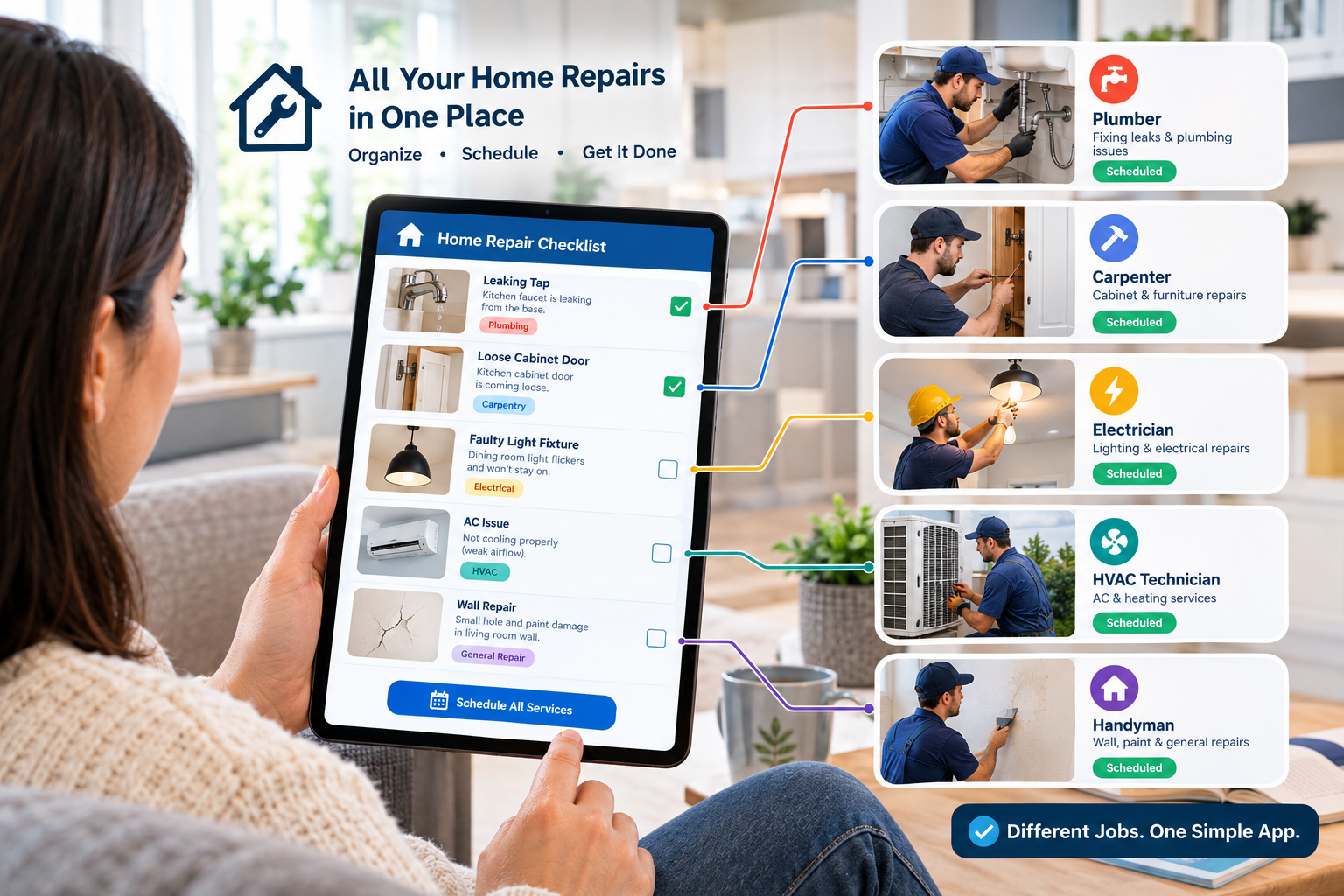
The easiest way to organize multiple home repairs is to create one complete repair list, prioritize urgent problems, group jobs by trade, document each issue, and then determine which tasks can reasonably be handled together. Instead of contacting a different contractor every time you notice a small problem, organize the work first so that related repairs can be coordinated more efficiently.
This approach is especially useful when a home has accumulated a mixture of handyman, plumbing, electrical, carpentry, and AC tasks. Some jobs may fit one professional’s skill set, while others clearly require a specialist.
Start With One Complete Home Repair Checklist
Walk through the property and record every problem before making bookings.
Avoid relying on memory. A written or digital checklist makes it easier to see how many tasks exist and whether several of them belong to the same service category.
A repair list might include:
- Loose kitchen cabinet hinge
- Dripping bathroom tap
- Bedroom AC with weak cooling
- Door that does not close correctly
- Faulty electrical socket
- Shelf that needs mounting
- Damaged wall finish
- Loose furniture fitting
Add the location of each problem beside the task. For example, write “master bathroom tap” rather than simply “tap.”
This small detail makes the list much easier to organize later.
Prioritize Repairs Before Scheduling Them
Not every household task deserves the same priority.
Start by separating urgent or potentially hazardous problems from routine maintenance and cosmetic work.
A suspected electrical fault, actively leaking water, or another issue that could create further damage generally deserves attention before a loose cabinet handle or minor paint defect.
A practical priority system can be:
Urgent: Problems involving immediate safety concerns or active damage.
Important: Functional problems that interfere with normal use of the home but are not immediate emergencies.
Routine: Small repairs, adjustments, installations, or cosmetic tasks that can reasonably be scheduled together.
Prioritization prevents a long list of minor jobs from distracting attention from a problem that needs faster action.
Organize Multiple Home Repairs by Service Category
Once the list is complete, group the tasks according to the skills they are likely to require.
Handyman and General Tasks
Small practical jobs such as mounting shelves, adjusting doors, assembling furniture, replacing simple fittings, or fixing minor household hardware may fit a general handyman visit.
Plumbing
Group leaking taps, drainage issues, toilet problems, visible pipe leaks, and other water-system concerns together.
Electrical
Faulty sockets, repeated circuit breaker trips, wiring concerns, or other technical electrical issues should be separated from ordinary handyman tasks and directed to an appropriately qualified professional.
AC and Cooling
Weak cooling, unusual AC operation, drainage problems associated with the unit, or technical servicing belong in the AC or HVAC category.
Carpentry and Finishing
Cabinet repairs, wooden doors, fitted furniture, and more involved woodwork may require carpentry skills, while painting or wall-finishing work can form another category.
Grouping repairs this way shows whether you actually need several specialists or whether multiple compatible jobs can be handled in fewer visits.
Document Each Problem Before Contacting Anyone
A good repair list explains more than the name of the task.
For each issue, record:
- What is happening
- Where it is located
- When you first noticed it
- Whether it is constant or intermittent
- Whether the problem is getting worse
- Any safe and useful photos
- Relevant appliance or equipment details
For example, “AC problem” provides little information.
“Living-room AC turns on and produces airflow but no longer cools the room properly” gives a technician a clearer starting point.
Similarly, “bathroom leak” can become “water drips beneath the basin only when the tap is running.”
Clear descriptions make it easier to route each task appropriately.
Can Several Repairs Be Handled in One Visit?
Yes, when the tasks genuinely fit the same professional’s skills.
If your list includes adjusting two doors, mounting a shelf, fixing cabinet hardware, and assembling a small item of furniture, combining those tasks into one handyman request may be practical.
However, combining tasks should not mean assigning specialist work to someone simply because they are already at the property.
A recurring electrical fault and a leaking pipe, for example, involve different technical areas even if both problems are relatively small.
The objective is efficient coordination, not forcing unrelated trades into one job.
Use a Multi-Category Platform When Different Trades Are Needed
When a repair list crosses several categories, repeatedly searching for unrelated contractors can make coordination more complicated.
A multi-category service marketplace can provide a central starting point for different repair needs. For example, residents can use https://repairoo.ae/ when organizing household jobs that may involve handyman work, plumbing, electrical services, carpentry, AC support, or other home-maintenance categories.
This does not mean one technician should perform every task. Instead, the advantage is being able to organize different service requirements through a broader platform rather than treating every new repair as a completely separate search.
Should You Group Jobs by Room or by Trade?
Usually, grouping by trade is more useful for booking, while grouping by room can help during the initial inspection of your home.
For example, walking room by room might help you discover:
Kitchen: dripping tap, loose cabinet door, faulty socket.
Bedroom: sticking door, weak AC cooling.
Living room: shelf installation, damaged wall finish.
Once documented, reorganize those tasks by professional category. The kitchen alone could require plumbing, carpentry, and electrical expertise.
This two-stage method reduces the chance of overlooking repairs while still making the final service list practical.
Prepare the Property Before Appointments
Good coordination continues after the booking.
Make sure the affected areas are reasonably accessible. Move ordinary household items away from the work area when practical, and have your repair checklist available.
If you live in an apartment, consider whether technicians need reception access, parking information, building-management permission, or access to shared areas.
For appliances or equipment, keep useful model details available if you already have them.
Preparation helps each professional focus on the actual work rather than spending unnecessary time identifying which tasks were supposed to be addressed.
Review Completed Tasks Against Your Checklist
Keep the original repair list until all work is complete.
After each visit, mark which jobs were addressed and which still require attention. If a technician identifies a separate issue outside the original scope, record it as a new item instead of losing track of it.
This is particularly useful when several trades are involved over different days.
A simple checklist can show what is complete, what is scheduled, and what still needs the right professional.
Turn a Scattered Repair List Into a Clear Plan
Multiple small home repairs become easier to manage when they are treated as one organized project rather than a series of unrelated interruptions.
Start with a complete property walkthrough, rank problems by urgency, group them by trade, document the symptoms, and combine compatible tasks where practical. Keep specialist electrical, plumbing, AC, and other technical work with professionals suited to those jobs.
With a structured repair checklist and clear service categories, homeowners can coordinate several maintenance needs without unnecessarily calling a different contractor every time a new minor problem appears.